 ™
TopicJensen Huang Resigns as Nvidia CEO
WSJ: Nvidia Financed Startups to Buy Its Own Chips
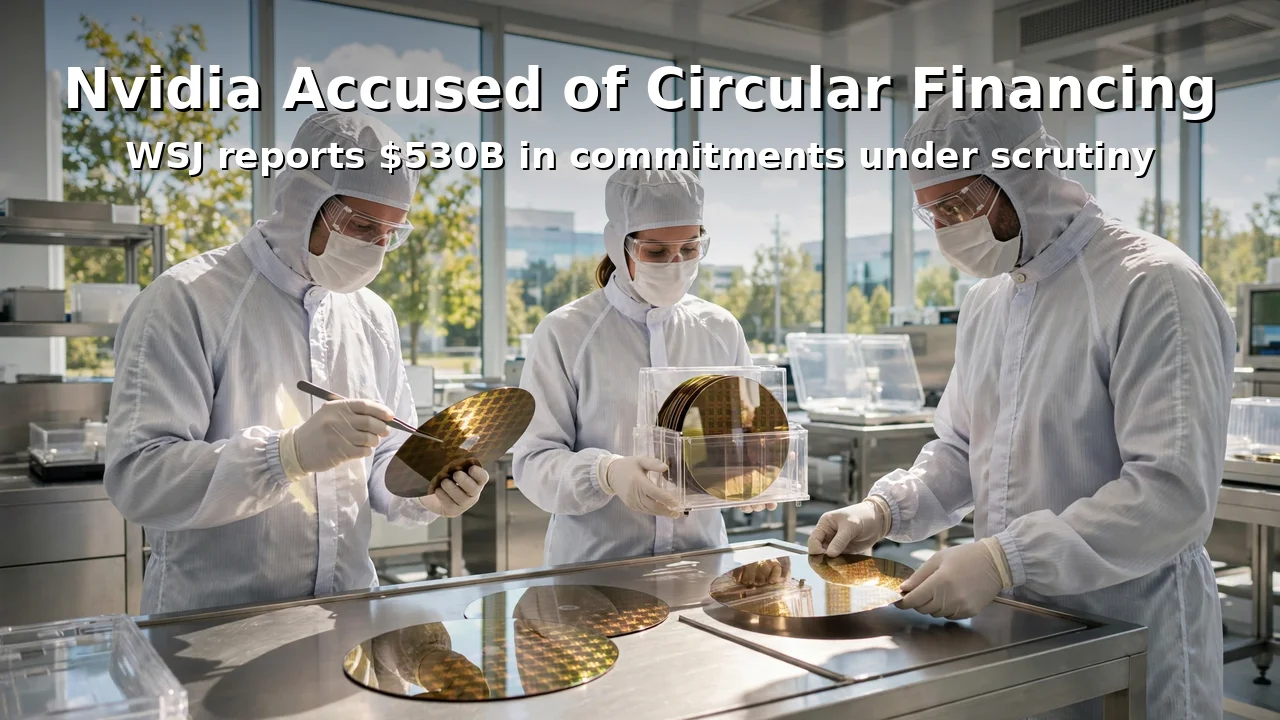
The Wall Street Journal reported on November 13 that former Nvidia CEO Jensen Huang used the company's balance sheet to finance AI startups and data-center operators so they would keep buying Nvidia chips, absorbing prepaid silicon and memory ordered from TSMC; Nvidia has contacted TSMC to wind down upcoming chip orders.
What happened
According to the report, Huang privately described the pile of prepaid silicon and memory Nvidia had committed to buy from Taiwan Semiconductor Manufacturing Company as an 'avalanche': large cloud companies were shifting to their own custom chips, leaving Nvidia holding surplus orders. Rather than cut prices to clear the surplus, the company funded the customers that would absorb it.
At the center of the report is a tense meeting in August 2026 between Huang and longtime Chief Financial Officer Colette Kress, now interim chief executive after Huang's resignation. Kress pushed to rein in circular-financing commitments to smaller cloud providers and large AI firms such as OpenAI and Anthropic, while Huang pushed to expand them. Early discussions had floated underwriting roughly eight gigawatts of OpenAI computing capacity, valued at up to $250 billion; Kress scaled Nvidia's signed guarantee cap down to about 4.25 gigawatts, or up to $125 billion.
The report says Nvidia has since contacted TSMC to wind down upcoming chip orders. Nvidia reports third-quarter results on November 17, its first earnings since Huang's departure, with Kress presenting as interim chief executive.
Key facts
- Report's source: The Wall Street Journal reported on November 13 that former Nvidia CEO Jensen Huang used the company's balance sheet to finance AI startups and data-center operators so they would keep buying its chips.
- Scale of the glut: Huang privately called the prepaid silicon and memory backlog an 'avalanche'; SemiAnalysis, analyzing Nvidia's latest quarterly filing, put the company's total commitments and guarantees at about $530 billion, up from $184 billion a quarter earlier.
- August meeting: In August 2026, CFO Colette Kress argued for reining in circular-financing exposure while Huang pushed to expand it; the OpenAI guarantee under discussion was cut from about 8 gigawatts, up to $250 billion, to about 4.25 gigawatts, up to $125 billion.
- Receivables: The report says Nvidia's receivables had ballooned to $63 billion, while average payment terms stretched from 45 to 60 days.
- Share reaction: Nvidia's shares fell 13% in the week the report emerged, wiping about $573 billion from the company's market value, its worst week since April 2025.
- Company position: Nvidia has long rejected the circular-financing label.
- Next step: Nvidia has contacted TSMC to wind down upcoming chip orders; third-quarter results are due November 17, presented by interim CEO Kress.
Why it matters
Nvidia's shares fell 13% in the week the report emerged, wiping about $573 billion in market value, while its commitments and guarantees rose from $184 billion to about $530 billion in a single quarter; the November 17 earnings call will be presented by Kress, who pushed back on the deals.
Follow HIMIAO Horizon
No sign-up · Unsubscribe any timeNotifications
A ping on your phone or computer when the brief is out. No email needed.
Comments
Related
- Nov 11TSMC October Revenue Hits Record High
- Nov 13Jensen Huang Resigns as Nvidia CEO; CFO Kress Named Interim Chief
- Nov 9NVIDIA Board Opens Independent Probe as CEO Huang Reportedly Targeted by Foreign Intelligence Effort
- Oct 8Broadcom Arranges $50B+ Financing for OpenAI Custom Chips; Oracle and SpaceX Also Seek Chip Debt
- Oct 7Nous Research Raises $90M Series B at $1.5B Valuation
Today
Nov 15 Sunday- Brief
- GitHubGitHub Weekly Vol.5: 6 Projects Worth a Look This Week
Tested or read — weeklyAll →
- Quiz
- Call
Latest news
All →- Nov 15Perplexity Open-Sources Decider 1.3, Adding Text-Span Extraction
- Nov 15Microsoft 365 Outage Lasts Over 24 Hours After Network Upgrade Fault
- Nov 15GitHub Copilot to Retire Six Models on Dec 14, With No Successor Yet for Kimi K3
- Nov 15Fed Report: AI Becomes the Top Financial-Stability Risk for the First Time
- Nov 15FBI Warns Hackers Have Weaponized the ARTEX AI Pen-Testing Framework
- Nov 15Applied Materials Posts Record Q4 Revenue of $10.41B, Up 53%