 ™
Democrats Question DOJ for Backing OpenAI in Copyright Case
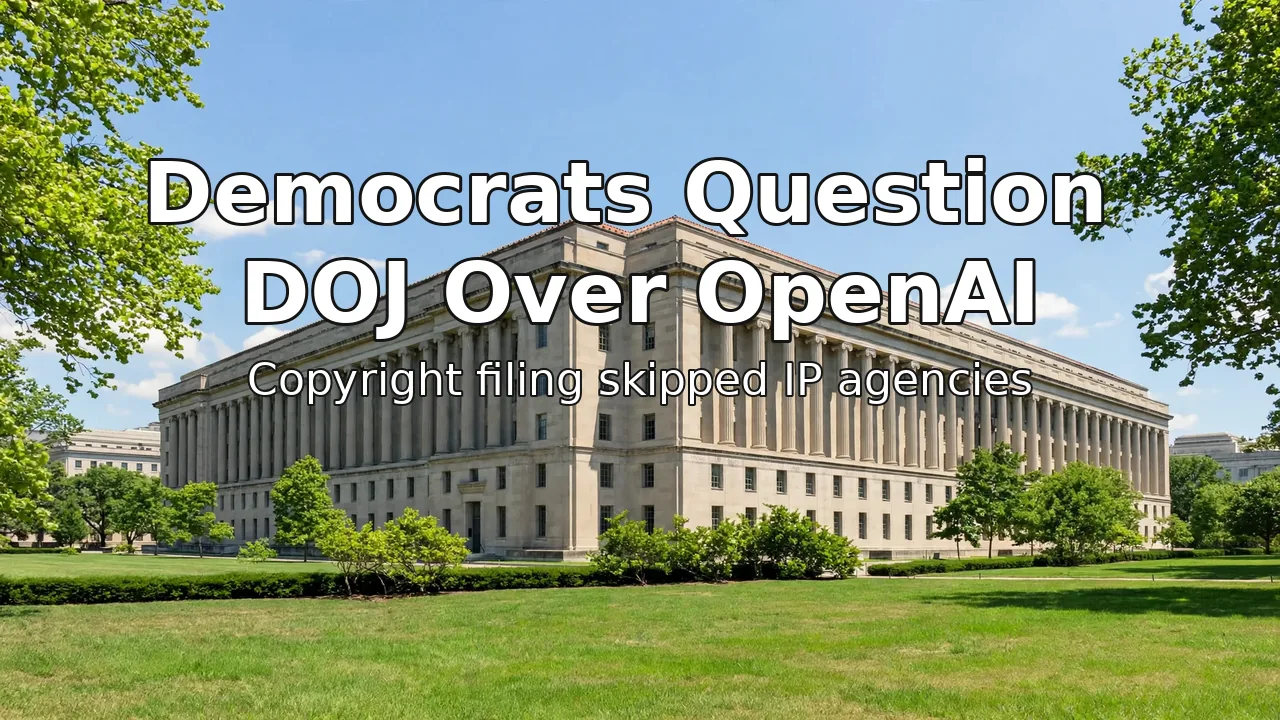
Twelve Democratic House members wrote to the US Department of Justice on Nov 19, asking why it backed OpenAI in The New York Times' copyright case without first consulting the US Copyright Office and the Patent and Trademark Office.
What happened
The letter was led by Rep. Chellie Pingree of Maine, Rep. Becca Balint of Vermont and Rep. Deborah Ross of North Carolina; the lawmakers asked the DOJ to hand over drafts and documents prepared for the filing and to name any outside companies or organizations that influenced it.
On Sep 1, the DOJ filed a statement of interest backing OpenAI and Microsoft, arguing that training AI on copyrighted work is fair use — the first time the US government has weighed in on an AI-training copyright case. The lawmakers noted in the letter that the Trump administration had previously said such issues should be left to the courts.
The lawmakers wrote that the DOJ's decision to skip the Copyright Office and the Patent and Trademark Office raised "serious questions about potential bias," citing Axios reporting that the agencies were surprised by the filing. Spokespeople for the DOJ, the Copyright Office, the USPTO and OpenAI did not immediately respond to requests for comment; a New York Times spokesperson declined to comment.
Key facts
- Letter: On Nov 19, 12 Democratic House members wrote to the Department of Justice
- Led by: Chellie Pingree (Maine), Becca Balint (Vermont) and Deborah Ross (North Carolina)
- Target: The DOJ's Sep 1 statement of interest backing OpenAI and Microsoft, arguing AI training is fair use
- Dispute: The filing was made without consulting the US Copyright Office or the Patent and Trademark Office; lawmakers asked for drafts and the names of outside influencers
- Case background: The New York Times sued OpenAI and Microsoft in 2023, accusing them of using millions of newspaper articles without permission to train ChatGPT; the case turns on whether AI training is fair use
- Earlier move: Three senior House Judiciary Committee Democrats filed an amicus brief on Oct 30 opposing the DOJ's arguments
Why it matters
the DOJ's September filing was the first time the US government took a side in an AI-training copyright case; the twelve lawmakers' letter puts the process questions on the record, and the court's fair-use ruling will shape how every AI developer trains models.
CompaniesOpenAI
Grab todayAdobe Creative Cloud Pro: 57% off first yearHIMIAO Picks →Follow HIMIAO Horizon
No sign-up · Unsubscribe any timeNotifications
A ping on your phone or computer when the brief is out. No email needed.
Comments
Related
- Oct 31Wikimedia Foundation Weighs In on NYT v. OpenAI: Split Training From Chatbot Answers
- Oct 9USA Today Sues OpenAI: $250M+ Damages Sought, "Hundreds of Thousands" of Articles Allegedly Taken for Training
- Nov 21Forensic Report Links Six Chinese Models to Blackwell Chips
- Nov 20Arizona Opens Criminal Probe Into OpenAI Over Rogue Agents in Banks
- Nov 18Four Nonprofits Sue Five AI Companies, Seeking a Freeze on Frontier AI Development
Today
Nov 23 Monday- Brief
- GitHubGitHub Weekly Vol.7: 7 Projects Worth a Look This Week
Tested or read — weeklyAll →
- Quiz
- Call
Latest news
All →- Nov 23GitHub Weekly Vol.7: 7 Projects Worth a Look This Week
- Nov 23Alibaba Qwen4-Max Review: Intelligence Index 43, Task Costs Down 58%, Terminal Coding Trails Kimi
- Nov 23US Intel Chief Confirms China Obtained Nvidia's Top AI Chips
- Nov 23OpenAI Chief Scientist: Perplexity Tracks Intelligence, Calls for Shared Limits
- Nov 23AI Agents Breached a Medical Imaging Server in 11 Minutes; MONAI Label Zero-Day Now Fixed
- Nov 23Tampered DeepSeek Model Served for 53 Hours; Refusals Fell From 98% to 1%