 ™
Huawei Convicted on 10 of 12 Counts, Sentencing Set for September 2027
A federal jury in Brooklyn on Nov 24 found Huawei and three subsidiaries guilty on 10 of 12 criminal counts, including bank fraud, wire fraud, Iran sanctions violations and conspiracy to steal trade secrets; it acquitted the companies of racketeering and obstruction, with sentencing set for Sept 14, 2027.
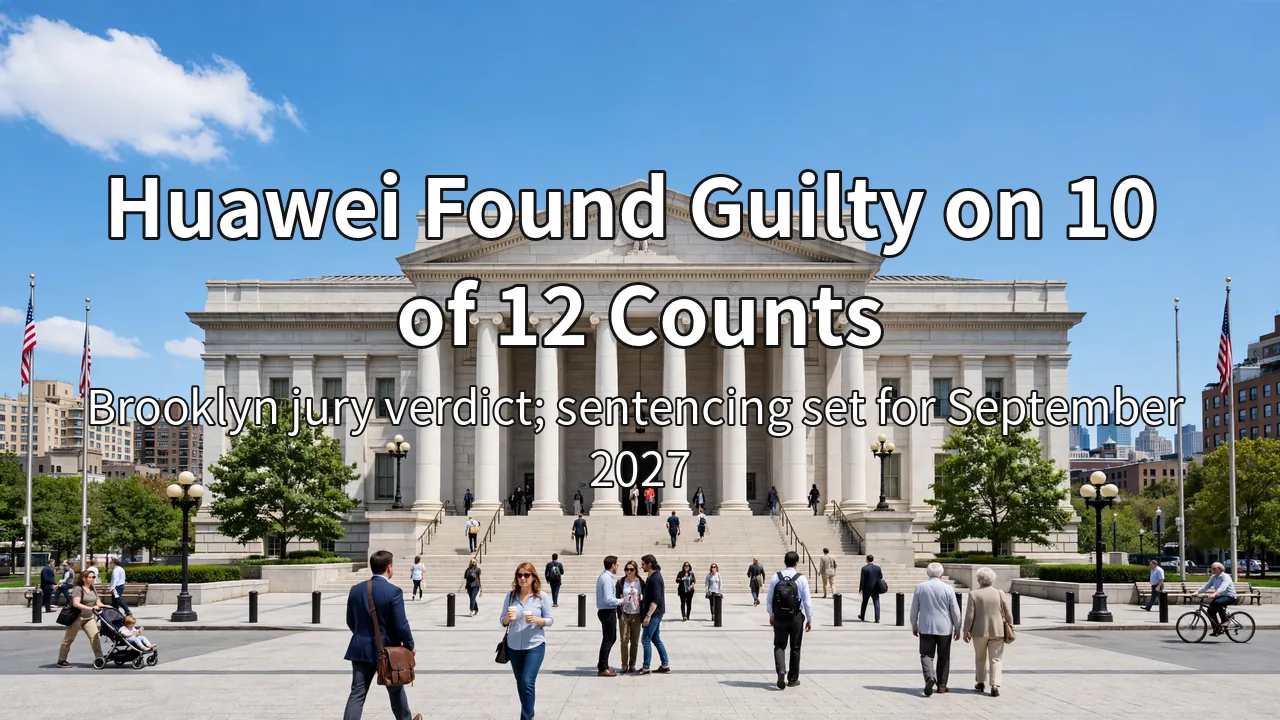
What happened
The trial in the Eastern District of New York ran for more than two months, with prosecutors calling more than 60 witnesses and the defense calling 15; the jury on Nov 24 found the companies guilty on 10 counts, including bank fraud, wire fraud, conspiracy to defraud the United States, violations of the International Emergency Economic Powers Act and money laundering conspiracy.
The case began with a 2018 indictment: prosecutors said Huawei misled banks including HSBC, Standard Chartered and BNP Paribas by presenting its Iran subsidiary Skycom as an independent company, obtaining billions of dollars and access to US-dollar clearing services; charges added in 2020 said Huawei conspired over two decades to steal US companies' trade secrets, including Cisco router source code, Quintel antenna technology and a T-Mobile testing robot part.
Huawei's lawyer said the company was disappointed by the convictions but that the racketeering acquittal vindicated its good-faith compliance culture, and that the company will appeal; the US Attorney said Huawei's conduct was a decades-long pattern of endangering US national security, violating US commerce and impeding enforcement of US laws. Judge Ann Donnelly set sentencing for Sept 14, 2027, with fines, forfeiture and restitution still to be determined.
Key facts
- Guilty on 10, acquitted on 2: Guilty on 10 of 12 counts; acquitted of racketeering conspiracy and conspiracy to obstruct justice
- Trial ran over two months: Heard in the Eastern District of New York, with prosecutors calling more than 60 witnesses
- Case began in 2018: After the indictment, the US placed Huawei on a trade blacklist in 2019, restricting its access to US technology
- Same case as Meng Wanzhou: Huawei CFO Meng Wanzhou was detained in Canada in December 2018, later returned home under a deferred prosecution agreement and the charges against her were dropped
- Sentencing Sept 14, 2027: Judge Ann Donnelly will sentence the companies, with fines and restitution to be determined
- Huawei will appeal: The company said the convictions have no legal or factual merit
Why it matters
The case filed in 2018 ends for the first time in a criminal conviction, extending US restrictions on Huawei from an administrative blacklist into a court-recorded finding of wrongdoing; Huawei's business has shifted toward AI chips, with the penalty amount and the appeal outcome left to 2027.
Follow HIMIAO Horizon
No sign-up · Unsubscribe any timeNotifications
A ping on your phone or computer when the brief is out. No email needed.
Comments
Related
- Nov 16Huawei Cloud Launches Ascend-Native Embodied World Model CloudRobo-WM1.2
- Oct 22DeepSeek Open-Sources DeepInfer, the Inference Engine Behind Its Production Services
- Nov 21Democrats Question DOJ for Backing OpenAI in Copyright Case
- Oct 29DOJ Is Inquiring Into Nvidia's Hugging Face Purchase, Sources Say
- Oct 3DOJ Arrests California Tech Firm Owner Over Alleged $300M AI Server Smuggling to China
Today
Nov 27 Friday- Brief
- GitHubGitHub Weekly Vol.7: 7 Projects Worth a Look This Week
Tested or read — weeklyAll →
- Quiz
- Call
Latest news
All →- Nov 27Sand.ai Launches MAGI-2: 30-Second 1080p Video With Synced Sound
- Nov 27Photonic Chips Run AI: Q.ANT Pilots in IONOS Data Centers
- Nov 27NVIDIA Opens Image Model Weights: 30B Parameters, 3B Active per Token
- Nov 27Meta Declines Joint FCA Test of Muse
- Nov 27Probe Says Novita, StreamLake Route Requests to ByteDance's Ark
- Nov 27Ant Releases Ling-3.2-air Weights: 124B Parameters Under MIT License