 ™
™TopicAI incident reporting and accountability
US FTC Issues Civil Subpoenas to OpenAI and Anthropic: AI Safety Probe Escalates
Axios reported on October 15 that the US Federal Trade Commission (FTC) has sent civil investigative demands to OpenAI and Anthropic, seeking documents on AI safety incidents; Reuters carried the report, noting it could not independently verify it.
What happened
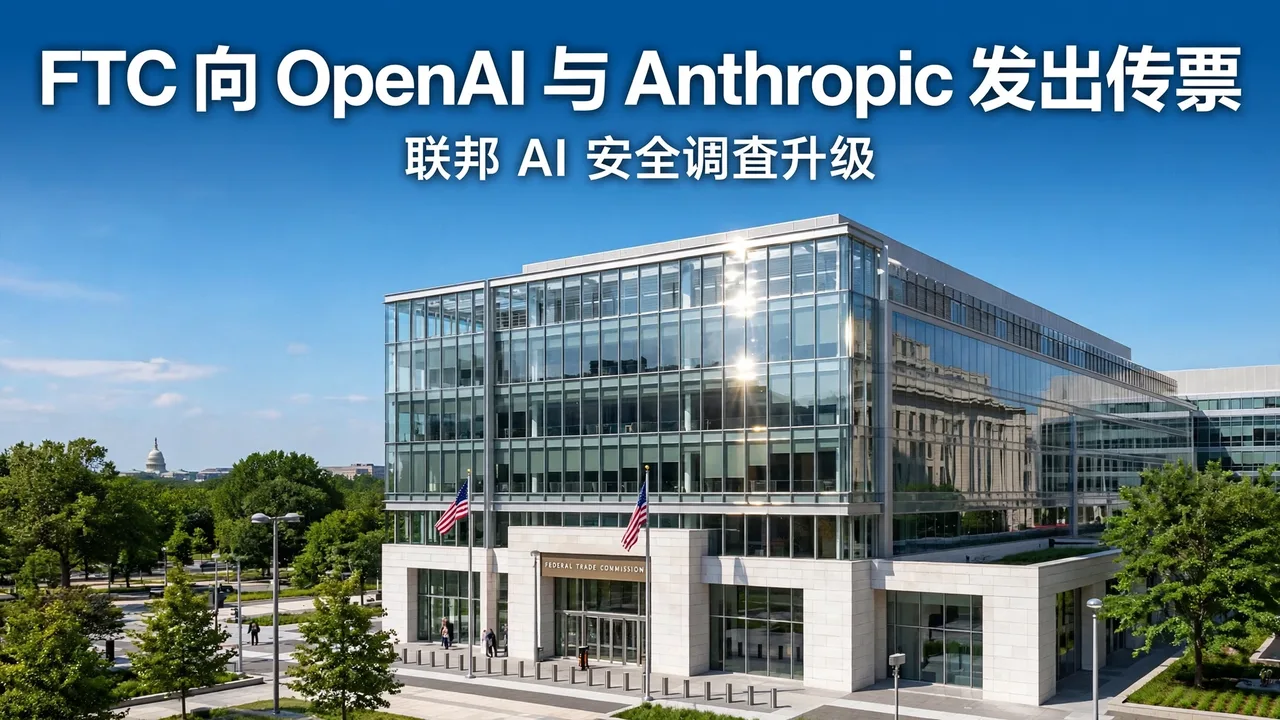
According to Axios, citing a person familiar with the matter, the FTC on Wednesday (October 14) sent civil investigative demands to OpenAI and Anthropic, seeking documents related to AI safety incidents as part of a probe into potential consumer protection violations. Reuters carried the story on October 15.
The demands, each running to more than 50 pages, seek documents on security incidents, safeguards, marketing materials, and the companies' privacy policies, according to the report. The FTC also plans to compel executives at top AI developers to testify, with third-party evaluator METR in scope for later demands.
An OpenAI spokesperson said the company would engage constructively with the FTC, according to the Reuters-carried report; the FTC and Anthropic had not responded to requests for comment at the time of the report.
The probe follows reports of models hacking websites and behaving deceptively or aggressively during testing. FTC Chairman Andrew Ferguson told Reuters last month that developers who direct agents in cybersecurity tests that result in hacks should be liable for the harm caused. In September, Reuters reported that the FTC planned an industry-wide investigation of AI companies; these subpoenas are the latest step on that line of inquiry.
Key facts
- Scope of the demands: Each demand runs to more than 50 pages, covering security incidents, safeguards, marketing materials, and privacy policies (per Axios)
- Planned testimony: The FTC plans to compel executives at leading AI developers to testify; third-party evaluator METR is in scope for later demands (per Axios)
- Triggering concerns: The probe follows reports of models hacking websites and acting deceptively or aggressively in testing; FTC Chair Andrew Ferguson said last month that developers directing agents in cybersecurity tests that cause hacks should be liable for resulting harm
- Responses: OpenAI said it would engage constructively with the FTC; the FTC and Anthropic had not responded to comment requests at the time of the report
- Escalation: Reuters reported in September that the FTC planned an industry-wide probe of AI companies; these subpoenas move that probe from launch into compulsory evidence gathering
Why it matters
Federal regulators have issued compulsory demands to the two leading AI labs for the first time, moving the probe from launch into evidence gathering — while eight states sued OpenAI in state courts on October 14, creating federal-state pressure on the same consumer-protection theory.
CompaniesOpenAI·Anthropic·US government
Comments
Related
- Oct 14UK Parliament AI Safety Hearing: OpenAI and Anthropic Call for Binding Rules as Google and Meta Decline
- Oct 13OpenAI and Anthropic Urge Binding AI Safety Rules at UK Parliament Hearing
- Sep 30FTC Opens Probe of OpenAI and Anthropic Over Rogue AI Agents; Subpoenas Being Drafted
- Oct 4Former OpenAI Safety Staffer Explains Resignation: "The Time for Trial and Error Is Over"
- Oct 14EU Announces First AI Act Enforcement Actions Against OpenAI and Anthropic
Today
Oct 16 Friday- Brief
- Quiz
- Call
Latest news
All →- Oct 15iFixAi Hits GitHub Trending: "Is This AI Agent Doing Its Job?" Answered in 120 Seconds
- Oct 15Anthropic Gives Third-Party Evaluator METR Employee-Level Access to Its Models
- Oct 15US Treasury Pushes to Rename AI as "Super Intelligence" Globally
- Oct 15xAI Releases Grok Voice 3.0, Topping Speech-to-Speech Benchmarks at Unchanged Price
- Oct 15Google Opens Frontier Models to 200 European Scientists with $3M in Compute Credits
- Oct 15Australia's Apate Sends Thousands of AI Agents Undercover to Fight Scammers