 ™
TopicMicron Taiwan Labor Dispute
Micron's Taoyuan 24-Hour Strike: Taiwan's First Semiconductor Walkout Puts Profit-Sharing on the Table
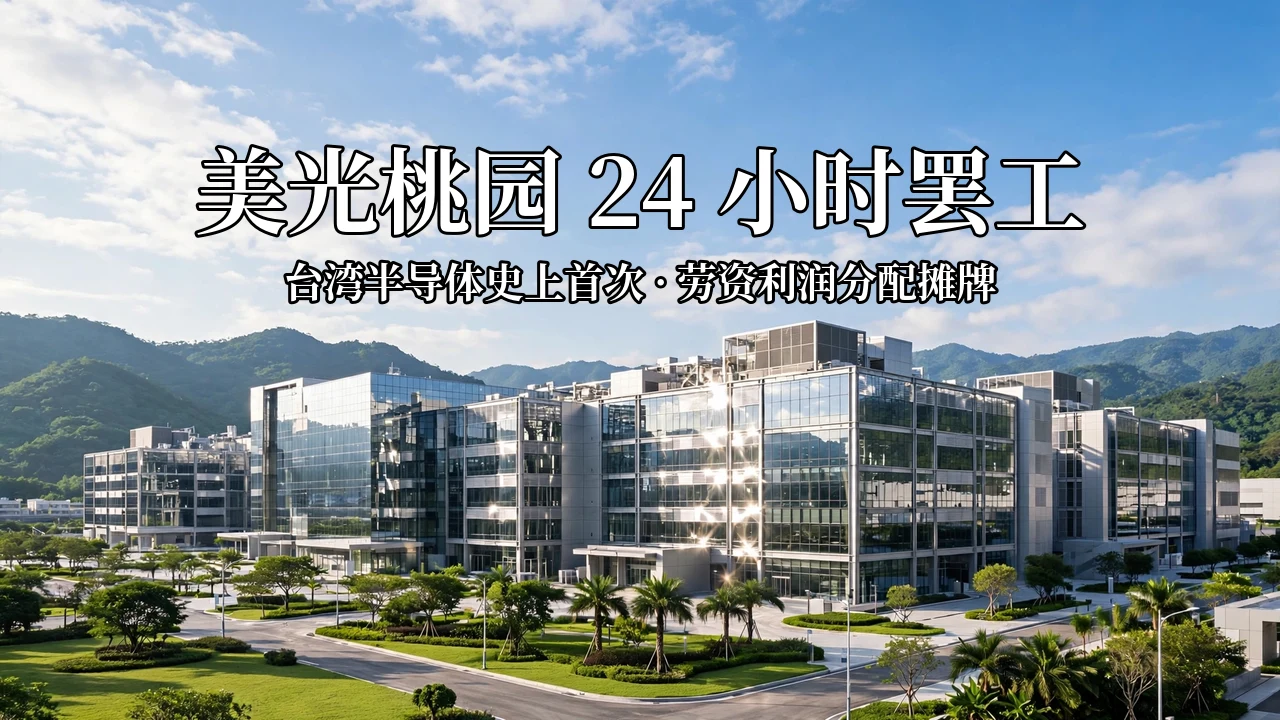
At 9 a.m. local time on Oct 22, picket lines appeared outside Micron's Taoyuan plant as 11 union officials began a 24-hour strike ending at 9 a.m. on Oct 23. The union demands a permanent 15% share of the company's operating profit from fiscal 2027 — reportedly the first semiconductor strike in Taiwan's history.
Latest
1 updates · newest first-
Story: expanded from the flash "Micron Taoyuan Workers Begin 24-Hour Strike, Taiwan's First Semiconductor Walkout" (https://himiao.ai/news/2026-10-23-micron-taoyuan-strike) into a full report.
Further updates will appear here
What happened
This was a precisely calibrated action. Not a full plant shutdown: 11 union officials picketed outside the factory while production lines kept running — Taiwan's Central News Agency called it a "warning-style" strike, and Caixin confirmed no direct disruption to output. The union also said it would poll members on the company's offer to decide its next move.
The strike date was a strategic choice: Oct 22 was also the day of a scheduled mediation session between Micron and its Taichung union. After September mediation collapsed, the Taoyuan union won strike authorization in early October — 1,994 of 2,012 ballots, about 99%, or 88.3% of 2,258 eligible members. But Oct 21 brought a split: Micron signed a collective bargaining agreement with the Taichung union, taking that site off the strike calendar, while talks with the Taoyuan union collapsed the same evening and the 24-hour strike began as planned.
At the heart of the dispute is the bonus system. The union wants a fiscal 2026 one-time bonus of about 83 months' salary and, from fiscal 2027, the abolition of the current IPP bonus system in favor of sharing 15% of operating profit with employees on a quarterly basis — plus no-free-rider (non-members excluded) and no-retaliation clauses. Micron's September offer was a one-time NT$1 million cash bonus per eligible Taiwan employee, with total annual compensation of up to about 68 months' pay — which the union rejected as another one-off that locked in no long-term formula.
The dispute carries weight because of Taiwan's place in Micron's map. Micron employs about 15,000 people in Taiwan: roughly 3,000 in Taoyuan (the union represents about 2,335 of them, some 70% of the plant) and about 12,300 in Taichung. Taiwan accounts for roughly half to 60% of Micron's global output, covering DRAM production and the advanced packaging and testing of HBM for AI servers — the company's core manufacturing hub.
Statements
The Taoyuan union blamed the breakdown on the company's refusal to name numbers. After talks ended, it said Micron had failed to provide specific figures for its proposed profit-sharing scheme, so the strike would go ahead, Reuters reported on Oct 21. Union chairman Lin Che-jui argues Micron's current incentive system leaves fab workers far behind executives and short of Samsung's and SK Hynix's profit-sharing practices.
Micron's response stayed measured. In a statement, the company said it "remains hopeful that both sides will continue their dialogue," and that it respected workers' legal rights and would keep negotiating with both unions in good faith. On Sept 1, Micron Taiwan had announced the highest performance bonuses in its history for this year; CEO Sanjay Mehrotra said on the Sept 30 earnings call that global incentive compensation for fiscal 2026 had been raised.
The Taichung site has already settled. On Oct 21, Micron and the Taichung union issued a joint statement announcing a signed collective bargaining agreement and their withdrawal from the Oct 22 mediation. Neither side disclosed the terms, saying each would communicate details to its own employees. Both unions had originally demanded the same 15% operating-profit sharing mechanism; with Taichung settled, only Taoyuan walked out.
Taiwanese officials weighed in too. Earlier this month, President Lai Ching-te attended the opening of Micron's expanded Taichung packaging plant and asked management and the unions to negotiate in good faith without damaging Taiwan's semiconductor image; the labor ministry urged the company to present concrete proposals instead of relying on one-off payouts. Supply-chain analyst TrendForce said the real impact would depend on how many engineers stay home, how long lines stop, and how much contingency labor Micron deploys; as of Oct 22, there was no solid evidence of production interruption.
Key facts
- Strike window: Began at 9 a.m. local time on Oct 22 for 24 hours, ending at 9 a.m. on Oct 23
- Form of action: 11 union officials picketed outside the plant; production lines kept running — a warning-style action
- Strike authorization vote: 1,994 of 2,012 ballots in favor, about 99%; 88.3% of 2,258 eligible members
- Union demands: A fiscal 2026 one-time bonus of about 83 months' salary; abolish the IPP system from fiscal 2027 and share 15% of operating profit quarterly; no-free-rider and no-retaliation clauses
- Micron's offer: A September one-off: NT$1 million per eligible Taiwan employee, total annual compensation of up to about 68 months' pay; the union called it opaque and one-off
- Taichung split: On Oct 21 Micron signed a collective bargaining agreement with the Taichung union, which withdrew from the strike calendar; terms undisclosed
- Korean precedent: Samsung's memory union ties bonuses to 10.5% of chip-division operating profit; SK Hynix agreed to 10% of annual operating profit
- Taiwan footprint: Micron employs about 15,000 in Taiwan (~3,000 in Taoyuan, ~12,300 in Taichung); Taiwan makes roughly half to 60% of Micron's global output, producing DRAM and HBM for AI servers
Why it matters
Taiwan's first semiconductor strike turns AI memory profit-sharing into open negotiation; Korean peers already tie bonuses to 10%–10.5% of profit, and 15% would set a new industry reference if agreed.
Comments
Related
Today
Oct 23 Friday- Brief
- GitHubGitHub Weekly Vol.2: 6 Projects Worth Your Time
Tested or read — weeklyAll →
- Quiz
- Call
Latest news
All →- Oct 23OpenAI Decisions API Generally Available, Powered by GPT-6 Luna
- Oct 23US Commerce Plans $389M in Semiconductor R&D Awards, Taking Minority Equity Stakes in Four Companies
- Oct 23Cable Capacity Becomes New Bottleneck for AI Data Centers: Nexans CFO Says a New Line Takes Three Years
- Oct 22Uber Puts All 30,000 Employees on ChatGPT Work
- Oct 22MiniMax Falls Below IPO Price as Hong Kong AI Stocks Plunge
- Oct 22Microsoft Says China-Linked Storm-0940 Used AI Pentest Tool Against Hundreds of Organizations