 ™
TopicGPT-6
Amateur Astronomers Use Astra to Find Exoplanet Candidates, 49 Await Verification
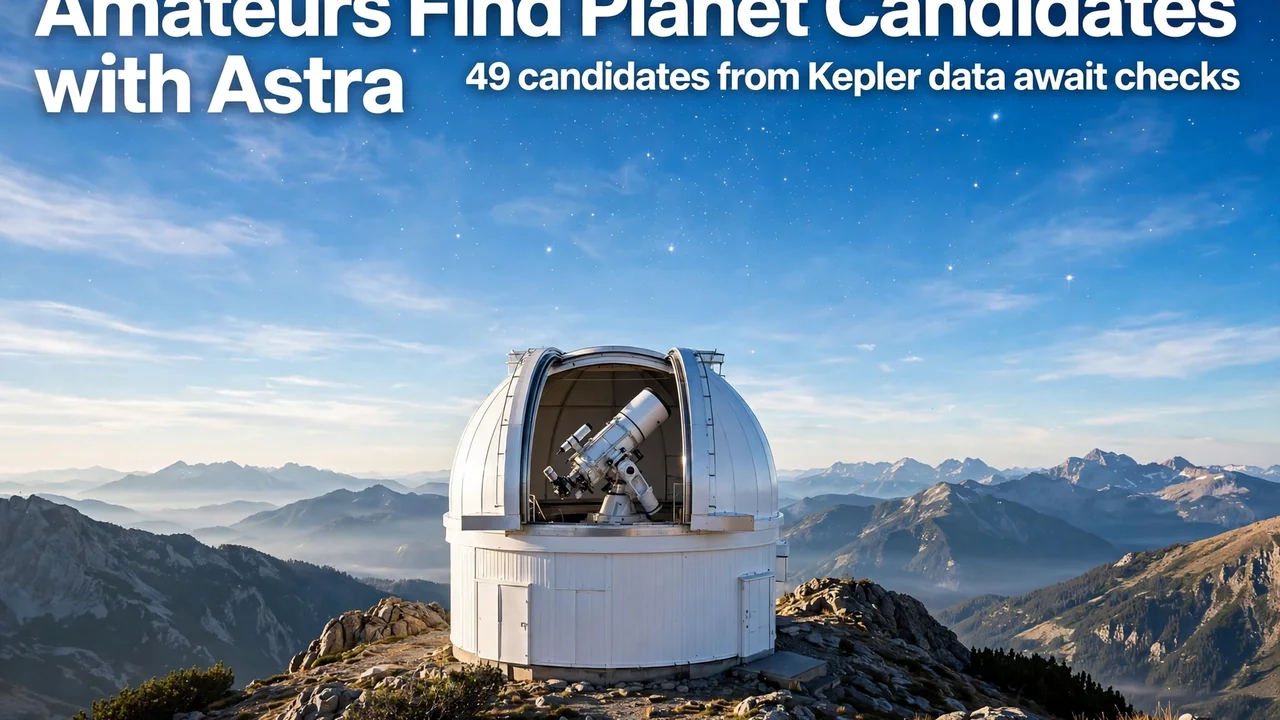
OpenAI said on November 24 that two amateur astronomers used Codex and Astra to analyze public data from NASA's Kepler and TESS telescopes, surfacing dozens of exoplanet candidate signals, including 49 from one initial analysis; none has been confirmed as a planet.
What happened
OpenAI described the case in an official blog post on November 24. Kevin Bond, an engineer at OpenAI, used Codex to write a search program analyzing about 100,000 stars observed by NASA's Kepler mission from 2009 to 2018; Ethan Byrd, a startup founder, used Astra to review published astronomical methods and build two search programs covering observations of about 19 million stars.
Bond's search flagged more than 200 signals, including 10 from already confirmed planets; two candidates stood out in later analysis: KIC 5689121 shows a dip in brightness every 13.8 days and, if caused by a planet, would measure about 2.4 times Earth's diameter, while KIC 6691030 dips every 4.8 days, matching a planet smaller than Neptune. Vishal Gajjar, associate director of the SETI Institute, ran an independent search and found two matching signals.
Byrd's initial analysis produced 49 candidates, the strongest of which he has submitted to researchers working on NASA's Transiting Exoplanet Survey Satellite (TESS) mission, with two more awaiting submission. Neither researcher claims to have discovered a new planet; the candidates need follow-up observations and independent checks before they can be confirmed as planets.
Key facts
- Case published: OpenAI published the blog post "Searching for distant planets with Astra" on November 24, describing how two amateur astronomers used Codex and Astra to search for exoplanets.
- Bond's search: Kevin Bond, an engineer at OpenAI, used Codex to analyze Kepler data for about 100,000 stars, flagging more than 200 signals, including 10 from already confirmed planets.
- Two candidates: KIC 5689121 dims every 13.8 days and, if caused by a planet, would be about 2.4 times Earth's diameter; KIC 6691030 dims every 4.8 days, matching a planet smaller than Neptune; the SETI Institute found two matching signals.
- Byrd's search: Ethan Byrd used Astra to cover about 19 million stars, producing 49 candidates in an initial analysis, one of which he has submitted to TESS mission researchers.
- Method: Both searches used the transit method: a planet passing between its star and Earth blocks a small amount of starlight, producing a repeating dip in the light curve.
- Not confirmed: Neither researcher has confirmed a new planet; similar signals can also come from binary stars or instrument noise, and need follow-up observations to check.
Why it matters
general-purpose models let amateur researchers carry out astronomical data analysis that previously needed professional training and institutional resources, and 49 candidates have entered professional verification; whether the planets are real still awaits follow-up observations.
CompaniesOpenAI
Grab todayAdobe Creative Cloud Pro: 57% off first yearHIMIAO Picks →Follow HIMIAO Horizon
No sign-up · Unsubscribe any timeNotifications
A ping on your phone or computer when the brief is out. No email needed.
Comments
Related
- Nov 22OpenAI Launches MedChemBench, a Medicinal-Chemistry Benchmark
- Nov 18OpenAI Launches GPT-6.2 Astra and Sol
- Nov 17OpenAI Launches Science Blog as GPT-6 Astra Leads Proof of Candidate Lattice Standard Model Definition
- Nov 8OpenAI Launches BioBasicsBench: GPT-6 Astra Scores 66.7% on Wet-Lab Tasks but Still Misreads Experiments
- Nov 6OpenAI Launches GPT-6 Cyber: Critical-Rated Vulnerability Hunting, Open Only to Vetted Security Teams
Today
Nov 25 Wednesday- Brief
- GitHubGitHub Weekly Vol.7: 7 Projects Worth a Look This Week
Tested or read — weeklyAll →
- Quiz
- Call
Latest news
All →- Nov 25OpenAI Launches OpenWorks, Paying Up to $8,000 a Month to Help Small Businesses Use AI
- Nov 25Anthropic Shares Fall Below IPO Price as Founding Siblings Each Cash Out $280 Million
- Nov 25OpenAI: GPT-6 Models Can Design Proteins, Lab Tests Show Binding Across Five Targets
- Nov 25Meta's Personal AI Agent Muse Launches in the UK
- Nov 25Google AI Mode Connects Wallet, Drive and the Gemini App
- Nov 25DeepMind: Gemini Agents Find Cheaper Quantum Algorithms