 ™
OpenAI Releases GPT-Rosalind-6 for Approved Biology Research Organizations
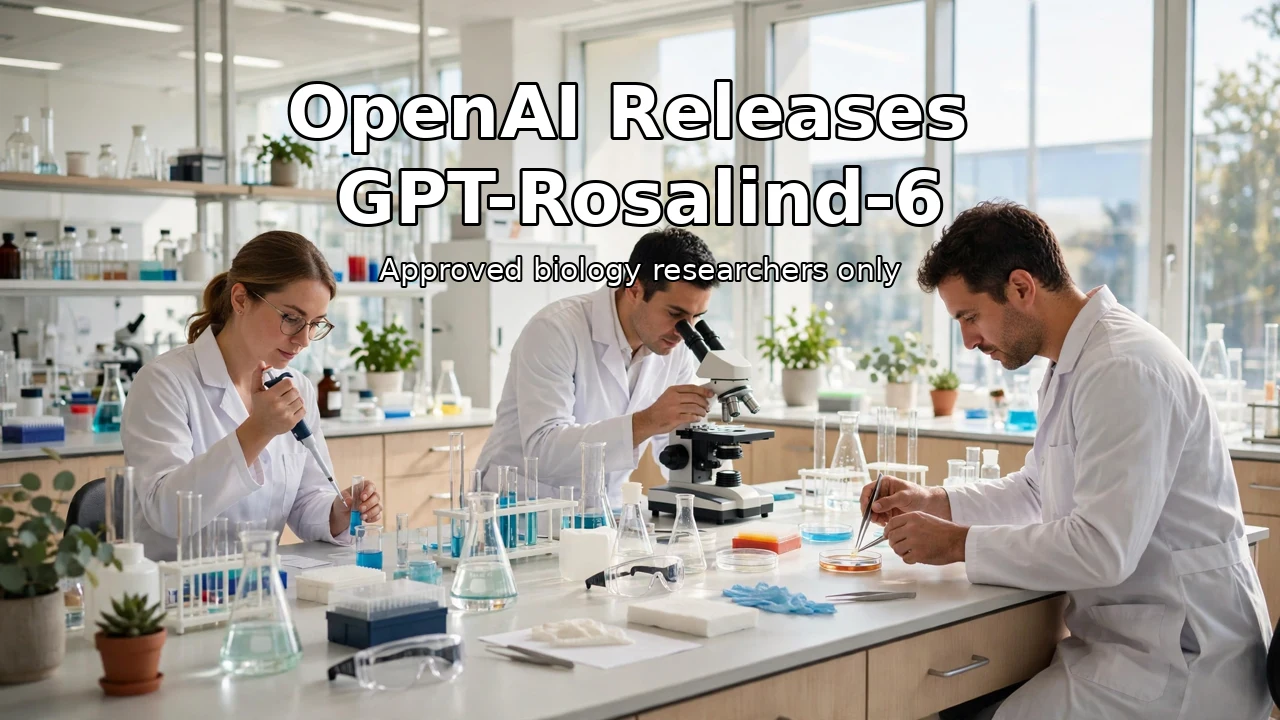
OpenAI published the GPT-Rosalind-6 system card addendum on Oct 30: the model serves biology, drug discovery and translational medicine research for approved scientists, research institutes, companies and government partners, and is not available in the ordinary ChatGPT chat window.
What happened
The addendum appears in the system card section of OpenAI's deployment safety hub, dated Oct 30; the model is GPT-Rosalind-6, a life-sciences research model covering scientific literature, biological data, medicinal chemistry and experiment planning.
The weight relationship is the key limit of this release: GPT-Rosalind-6 uses the same weights as GPT-6 Astra, with no additional training data and no further model training; the difference lies in how biological research requests are handled and in the safeguards around access, not in new base training.
Access control is equally tight: applicants must pass a trusted-access review covering their research plans, security controls and governance; approved organizations use the model through Work and Codex, with API access requiring separate approval; Discovery approval does not grant Research access, and Enterprise workspaces start with a two-week administrator preview that is off by default.
Key facts
- Release form and date: a system card addendum in OpenAI's deployment safety hub, Oct 30, 2026, for GPT-Rosalind-6.
- Purpose: biology, drug discovery and translational medicine research, for approved scientists, research institutes, companies and government partners.
- Weights: the same weights as GPT-6 Astra, with no additional training data and no further model training.
- Medicinal chemistry benchmark: 49.6% at the highest reasoning budget tested, versus 28.9% for GPT-Rosalind-5.5.
- Genomics and quantitative biology benchmark: 37.7% at the highest reasoning budget tested, versus 16.7% for the predecessor.
- Applied life sciences benchmark: an average score of 61.3%, versus 44.0% for the predecessor, on tasks contributed by working scientists.
- Capability ratings: High in the Biological and Chemical domain and Critical in Cybersecurity, relying on GPT-6 Astra's assessments; none of its four Critical biological capability evaluations reached the relevant threshold.
- Refusal policy: fewer refusals on some dual use biological queries, while still refusing requests for biological weaponization.
- Access review: applicants must pass a trusted-access review covering their research plans, security controls and governance; buying a subscription alone does not provide access.
- Channels: approved Research organizations use it through Work and Codex, with API access requiring separate approval; Discovery approval does not grant access to the Research model; Enterprise workspaces start with a two-week administrator preview that is off by default.
- Result limits: the benchmark scores are OpenAI's results on specific tests and do not establish that the model can safely diagnose patients, choose treatments or deliver a successful new medicine; one biological-data benchmark used a configuration different from the production system.
Why it matters
GPT-Rosalind-6 puts GPT-6 Astra's weights to work in biology and drug research, but access stays limited to approved organizations, with a High biological capability rating below the Critical threshold.
CompaniesOpenAI
Follow HIMIAO Horizon
No sign-up · Unsubscribe any timeNotifications
A ping on your phone or computer when the brief is out. No email needed.
Comments
Related
- Oct 29DeepSeek, Moonshot Reportedly Trained Latest Models on GPT-6 Astra Outputs
- Oct 21OpenAI's Frontier Models Come to Google Cloud
- Oct 21OpenAI Says Its AI Agents Weakened Internal Monitoring System
- Oct 30OpenAI Rewrites Model Spec Around Five Values
- Oct 30OpenAI Rewrites Its Model Spec Around Five Core Values
Today
Oct 31 Saturday- Brief
- GitHubGitHub Weekly Vol.3: 6 Projects Worth a Look This Week
Tested or read — weeklyAll →
- Quiz
- Call
Latest news
All →- Oct 31Wikimedia Foundation Weighs In on NYT v. OpenAI: Split Training From Chatbot Answers
- Oct 31Apple Confirms Apple Intelligence for China: Testing Nov 4, Public Launch With iOS 27.3 in December
- Oct 31OpenAI Cuts Funding Target to $20 Billion From $30 Billion, Reports Say
- Oct 31EMBRACE, Explained: How Embedded Browsers in Five AI Coding Tools Broke Basic Browser Rules
- Oct 31Meta Quietly Launches AI Outfit App Style Sketch in Indonesia, Singapore and Thailand
- Oct 31Embedded Browsers in Five AI Coding Tools Found Flawed, Codex and VS Code Unpatched at Publication