 ™
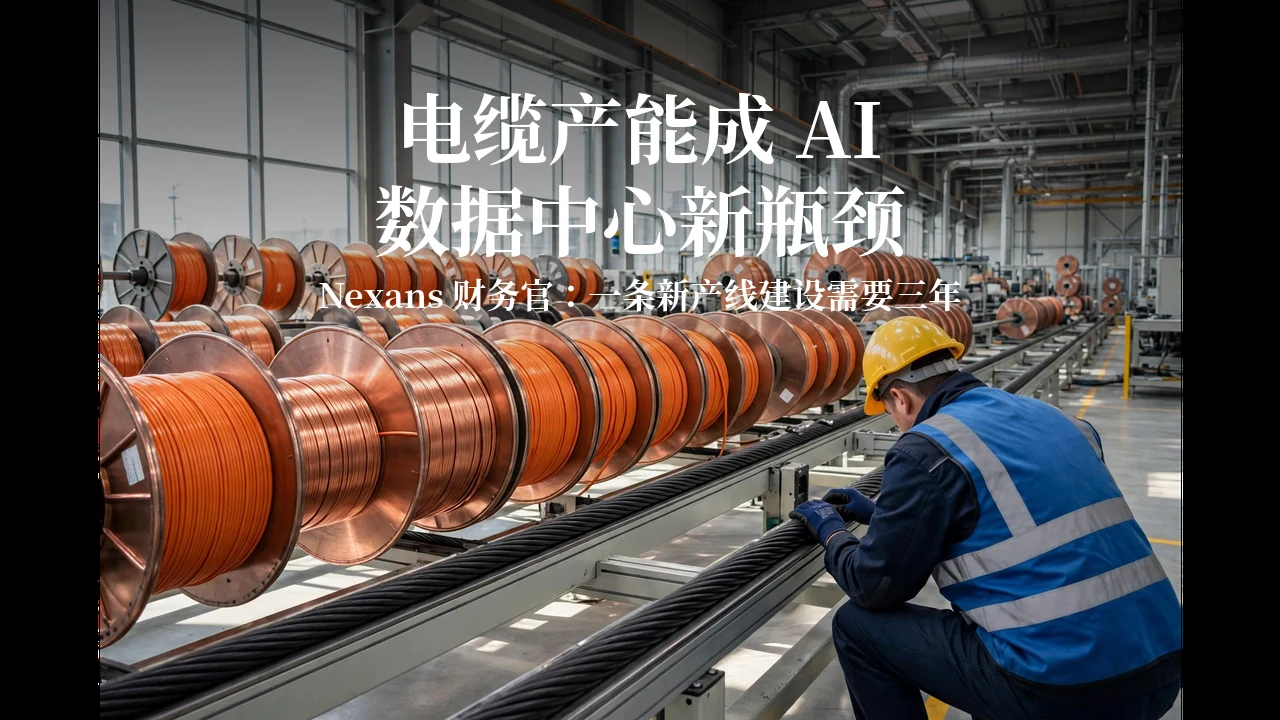
Cable Capacity Becomes New Bottleneck for AI Data Centers: Nexans CFO Says a New Line Takes Three Years
Nexans CFO Vincent Piquet told Reuters on Oct 22 that cable production capacity is becoming a new bottleneck for AI-driven data center construction, with demand growing faster than manufacturers can add capacity and global supply tightening.
What happened
In an Oct 22 interview with Reuters, Nexans CFO Vincent Piquet described cable capacity as an emerging new bottleneck for AI data center construction: building a new cross-linked polyethylene (XLPE) cable production line — known in the industry as a CV line — takes about three years, limiting how quickly suppliers can respond to demand.
Piquet said: "Things can't move quickly and the people building these data centres are in a hurry." Data centers require large amounts of low- and medium-voltage cable to connect power infrastructure, with larger facilities consuming proportionately more medium-voltage cable.
Strain on power infrastructure is already delaying some projects. Reuters reported that in September, Oracle issued a force majeure notice to a Blue Owl unit developing a large data center in New Mexico, citing potential difficulties in securing sufficient power for the site. Piquet added that while grid constraints are slowing some projects, they are also supporting demand for Nexans' products, allowing the company to be more selective when allocating capacity.
Key facts
- Three-year cycle: : building a new XLPE cable line (a CV line) takes about three years, so suppliers cannot expand capacity quickly
- Longer contracts: : French distribution network operator Enedis has moved cable procurement from annual agreements to six-to-seven-year contracts to secure supply
- Europe vs. the US: : Europe generally faces fewer grid-connection challenges than the US and benefits from stronger electricity networks in some northern countries, though lengthy regulatory processes are delaying certain projects
- Demand outlook: : Piquet said he does not expect AI-linked demand to slow, though Europe's data-center expansion will likely be less pronounced than in the US, where private investment capacity is smaller and public funding plays a larger role
Why it matters
After power, cables are the second hard constraint on AI infrastructure: a new production line takes about three years to build, so the supply bottleneck will last for years and construction pace is held up by raw materials.
Comments
Related
- Oct 22Nebius Secures $3.5 Billion Senior Secured Facility from Citi for Data Centers and GPU Purchases
- Oct 22Meta Q3 Revenue Hits Record $64.6B, Creates Class C Shares to Fund AI
- Oct 12IMF Chief: AI Investment Is Keeping Global Growth Around 3%, With Major Benefits for Asia
- Oct 11Google's $15 Billion India AI Data Center Sparks Backlash; Company Responds to Water and Power Fears
- Oct 8Sesterce Plans $11B AI Data Center Investment in Finland
Today
Oct 24 Saturday- Brief
- GitHubGitHub Weekly Vol.2: 6 Projects Worth Your Time
Tested or read — weeklyAll →
- Quiz
- Call
Latest news
All →- Oct 24Anthropic Has Claude Write Formal Proofs for 123 Open-Source Libraries
- Oct 23State Council: Minimize AI's Impact on Workers in Labor-Intensive Industries
- Oct 23Hugging Face Open-Sources Carbon-X, a DNA Model You Can Chat With
- Oct 23AWS Continuum for Code Vulnerabilities Goes GA: Validate First, Then Fix
- Oct 23Four Giants Donate Key Agent Projects as AAIF Hits Ten Hosted Projects in a Year
- Oct 23Micron's Taoyuan 24-Hour Strike: Taiwan's First Semiconductor Walkout Puts Profit-Sharing on the Table